
If you have spent much time around dogs, you’ve probably
seen a dog that responds only when the owner holds a treat in their hand. It
usually happens when someone has taken an obedience class or two, but doesn’t
continue practicing at home. The dog is eager and willing to work for the owner—if
treats are visible. Otherwise? Phhht… the dog has more interesting things to
do!
 |
| Dogs prefer to work for something of value |
As a result, some people throw the baby out with the bath and refuse to use any treats at all in training. However, just like people, dogs prefer to work for something of value. How many people would return to a job, day after day, without ever receiving payment? Our currency is money, but dogs intrinsically understand the value of food, which can be dispensed in small amounts and immediately after the desired “work” is done. If you have a dog, you feed him anyway; why not make him work for it? Rewards can be special treats mixed in with regular dog food.
Keep reading to learn a trainer’s secrets to have an obedient dog without always having a cookie in hand.
Start with the Basics
 Often, the first step in teaching a
dog a new skill is to lure him: for example, by placing a cookie over his nose,
and gradually pushing it back towards his ears, you can encourage him to ‘sit’
and reward him with the cookie. The next
step is to repeat this action so the dog anticipates the behavior.
Often, the first step in teaching a
dog a new skill is to lure him: for example, by placing a cookie over his nose,
and gradually pushing it back towards his ears, you can encourage him to ‘sit’
and reward him with the cookie. The next
step is to repeat this action so the dog anticipates the behavior. Fading the Lure
Once the dog is anticipating the
behavior (usually within 5-10 repetitions), only pretend like you have a cookie in hand and quickly lure him into
the sit. If he sits, congratulations! Immediately reward him with a cookie from the
other hand or a nearby treat bag. He
will learn he doesn’t need to see the
treat in order to be rewarded. He
should be just as willing to perform for an imaginary cookie, because he knows
he will still get rewarded.
* If he loses interest, it’s best
to put the cookies away and try again when he is hungrier. Do not
bribe him with a cookie at this point!
This is one of the situations where dogs learn to control their owners:
“Hmmm, if I don’t sit, she will get
out a treat!” If you are having
difficulty at this step, I encourage you to find a dog trainer who can help you
recognize a dog that is truly confused vs. a dog that is not interested or trying
to get his own way.
Fading rewards
When the dog is consistently
performing the cue using an imaginary cookie, it is time to start fading out
the rewards. One way is by having the
dog perform several actions in a row for a single treat. You can perhaps have the dog do a ‘sit’ for a
cookie, then a ‘down’ with a cookie, then another ‘sit’ and a ‘down’ before
offering a cookie. Notice you don’t take
away the treats all at once. Your dog should understand he will still be
getting treats, but you decide how often they appear.
It is equally important when fading
rewards that you aren’t consistent in
delivery: if you decide to reward after every other command, and then every third
command, the dog will quickly figure out the tactic and will lack motivation to
work. But if you reward the dog randomly, say, on the 2nd, 3rd,
5th, 8th, 9th, and 10th tries, he
will work harder because he doesn’t know if this
will be the one that earns his cookie.
 The jackpot is another method to
fade rewards, especially useful when performing multiple commands. A jackpot is a series of small treats
delivered one after the other, just like a jackpot of coins coming out of a
winning slot machine. It is more
meaningful to a dog to have several small treats offered one at a time, than to
have one large treat or multiple small treats delivered at one time. So if you have your dog sit, then down,
then sit again, you can reward him with verbal praise and petting while also
delivering a jackpot of cookies, one at a time.
The jackpot is another method to
fade rewards, especially useful when performing multiple commands. A jackpot is a series of small treats
delivered one after the other, just like a jackpot of coins coming out of a
winning slot machine. It is more
meaningful to a dog to have several small treats offered one at a time, than to
have one large treat or multiple small treats delivered at one time. So if you have your dog sit, then down,
then sit again, you can reward him with verbal praise and petting while also
delivering a jackpot of cookies, one at a time.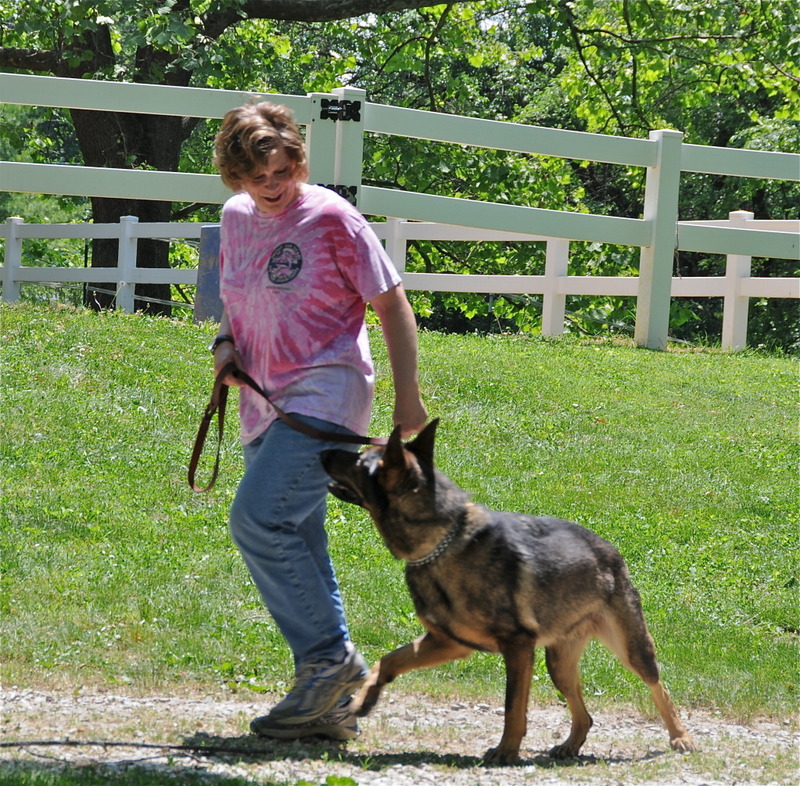 |
| Hoss was a dog that would happily work just for love and attention. |
 |
| My own dogs are watching intently to see if they will get a treat this time! |
As you can see, training with
cookies does not mean you will need to rely on them for every command for the
rest of the dog’s life. Once your dog
understands the basics of a behavior, you should stop using the cookie as a
lure. It is helpful to continue to
reward the dog randomly throughout his life, but rewards can vary from praise,
jackpots, and real-life rewards.

